Age, Biography and Wiki
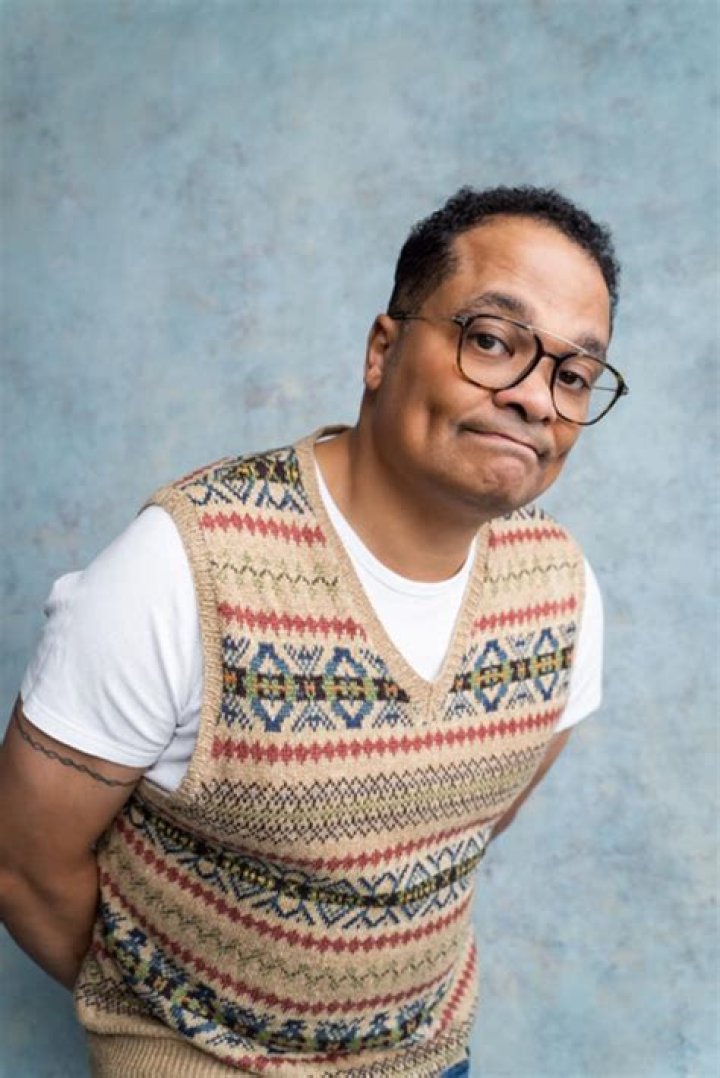
G. K. Butterfield (George Kenneth Butterfield Jr.) was born on 27 April, 1947 in Wilson, North Carolina, U.S., is a politician. Discover G. K. Butterfield's Biography, Age, Height, Physical Stats, Dating/Affairs, Family and career updates. Learn How rich is He in this year and how He spends money? Also learn how He earned most of networth at the age of 76 years old?
| Popular As | George Kenneth Butterfield Jr. |
| Occupation | N/A |
| Age | 76 years old |
| Zodiac Sign | Taurus |
| Born | 27 April, 1947 |
| Birthday | 27 April |
| Birthplace | Wilson, North Carolina, U.S. |
| Nationality | North Carolina |
We recommend you to check the complete list of Famous People born on 27 April. He is a member of famous politician with the age 76 years old group.
G. K. Butterfield Height, Weight & Measurements
At 76 years old, G. K. Butterfield height not available right now. We will update G. K. Butterfield's Height, weight, Body Measurements, Eye Color, Hair Color, Shoe & Dress size soon as possible.
| Physical Status | |
|---|---|
| Height | Not Available |
| Weight | Not Available |
| Body Measurements | Not Available |
| Eye Color | Not Available |
| Hair Color | Not Available |
Who Is G. K. Butterfield's Wife?
His wife is Jean Farmer (m. 1971-1991) Sylvia Chester Butterfield (m. 2021)
| Family | |
|---|---|
| Parents | Not Available |
| Wife | Jean Farmer (m. 1971-1991) Sylvia Chester Butterfield (m. 2021) |
| Sibling | Not Available |
| Children | 3 |
G. K. Butterfield Net Worth
His net worth has been growing significantly in 2022-2023. So, how much is G. K. Butterfield worth at the age of 76 years old? G. K. Butterfield’s income source is mostly from being a successful politician. He is from North Carolina. We have estimated G. K. Butterfield's net worth , money, salary, income, and assets.
| Net Worth in 2023 | $1 Million - $5 Million |
| Salary in 2023 | Under Review |
| Net Worth in 2022 | Pending |
| Salary in 2022 | Under Review |
| House | Not Available |
| Cars | Not Available |
| Source of Income | politician |
G. K. Butterfield Social Network
| Wikipedia |
| Imdb |
Timeline
On December 30, 2022, Butterfield resigned from his position to take up a lobbying position.
In November 2021, Butterfield announced that he would not run for election in 2022.
Butterfield is a lifelong member of Jackson Chapel First Missionary Baptist Church in Wilson, North Carolina, where he has served as Trustee and Chairman of the Finance Ministry. He also serves on the Board of Visitors for the North Carolina Central University School of Law and as a Trustee of Gallaudet University. He is a member of Groove Phi Groove Social Fellowship, Incorporated. In 2017, the City of Greenville named its new transit center, the G.K. Butterfield Transportation Center, in his honor.
On July 23, 2014, Butterfield introduced House Joint Resolution 120, approving the location of a memorial to commemorate the more than 5,000 slaves and free black persons who fought for independence in the American Revolution.
In 2012, Butterfield introduced legislation that would require more input from the public before tolls are introduced on roads. The legislation was in response to the "No toll on I-95" group, a Roanoke Rapids-based group that opposes instating a toll on I-95. Opponents of the toll argue that it leads to double taxation, and say it is the first time that "the federal government has put tolls on an existing interstate."
In April 2012, Butterfield accompanied Obama to the University of North Carolina at Chapel Hill to speak about extending the interest rates on federal loan programs for many undergraduate students. Butterfield expressed concern with the pending expiration, saying: "Allowing the current interest rates to expire would burden students with additional debt, prolong their ability to kick start their careers, and send the message that it is more important to cut taxes for the wealthy than educational expenses for our young people."
In 2011, he voted to extend expiring provisions of the PATRIOT Act and in favor of the National Defense Authorization Act (NDAA) for Fiscal Year 2012.
In 2009, Butterfield introduced the Don't Let the Bed Bugs Bite Act "to assist states in carrying out inspections of lodging facilities, train inspection personnel, contract with a commercial exterminator; educate owners and staff at lodging facilities." He also passed H.R. 4252 "[t]o amend the Small Business Act to change the net worth amount under the small business program for socially and economically disadvantaged individuals from $750,000 to $978,722, and for other purposes."
Originally endorsing John Edwards for the 2008 Democratic Party presidential nomination, Butterfield endorsed Barack Obama in January 2008.
In 2008, Planned Parenthood gave Butterfield an 80% rating. In 2009, Butterfield supported the interests of NARAL Pro-Choice America 100% of the time. He identifies as pro-choice on abortion, and especially supports legalized abortion when the life of the woman is in danger or if the pregnancy is a result of rape or incest. He called the day that the Supreme Court overturned Roe v. Wade a "sad day".
Butterfield voted in 2008 against the Troubled Asset Relief Program (TARP) $700 billion bailout of the financial industry and the $14 billion rescue package for the auto industry.
Beginning in 2007, in the 110th Congress, Butterfield was chosen to serve as one of eight Chief Deputy Whips for the House Democratic Caucus. Chief Deputy Whips assist in the formulation of Democratic policy and ensure the passage of legislation by maintaining good communication with members. He was appointed to this position by Speaker Nancy Pelosi and Majority Whip Jim Clyburn.
Butterfield was first elected to the House of Representatives in a special election on July 20, 2004, to fill the seat of Frank Ballance, who had resigned after pleading guilty to conspiracy to commit mail fraud and money laundering. He assumed office on July 21, 2004.
Butterfield was elected to Congress in a special election on July 20, 2004, to fill the unexpired term of Representative Frank Ballance, who had resigned for health reasons. He defeated Republican nominee Greg Dority and Libertarian Party nominee Tom Eisenmenger. Butterfield was sworn into office on July 21, 2004.
On July 20, 2004, Butterfield won the Democratic primary, entitling him to run in the November general election. Running against Dority again, he won his first full term with 64% of the popular vote.
Butterfield has repeatedly voted against defining marriage as being between one man and one woman, voting against the Marriage Protection Act of 2004 and constitutional marriage amendments in 2004 and 2006. He has voted to ban job discrimination based on sexual orientation, and in 2010 voted for the repeal of Don't Ask Don't Tell.
His district was in the state's northeastern corner, which included all or parts of 19 counties. A longtime advocate of civil rights, Butterfield was appointed an associate justice of the North Carolina Supreme Court by Governor Mike Easley in 2001, retaining the position until 2003. He was a member of the Congressional Black Caucus and served as its chair from 2015 to 2017.
In 1988, Butterfield was elected Resident Superior Court judge in judicial district 7BC. Beginning on January 1, 1989, and for the next 12 years, he presided over civil and criminal court in 46 North Carolina counties. In February 2001, Governor Mike Easley appointed him to the North Carolina Supreme Court. In 2002, Butterfield lost his seat on the Supreme Court, but he returned to the Superior Court bench by special appointment of Governor Easley. He served in that position until his retirement in May 2004 to run for the U.S. House of Representatives.
Butterfield graduated from Charles H. Darden High School in Wilson. He went on to earn a Bachelor of Arts in political science and sociology from North Carolina Central University (NCCU), a historically black university. During his time at NCCU, Butterfield was active in voter registration activism, including coordinating voter registration drives in Durham and organizing a student march from the State Capitol in Raleigh to the Wilson County Courthouse to draw attention to the importance of voter registration. After completing his bachelor's degree, Butterfield attended the NCCU School of Law, receiving a Juris Doctor degree in 1974.
During his junior year at NCCU, Butterfield was drafted into the United States Army and stationed at Fort Bragg Army installation in Fayetteville. He served from 1968 to 1970 and was honorably discharged, and he returned to NCCU to complete his undergraduate degree.
George Kenneth Butterfield Jr. (born April 27, 1947) is an American lawyer and politician who served as the U.S. representative for North Carolina's 1st congressional district from 2004 to 2022. A member of the Democratic Party, he was first elected in a special election after the resignation of Frank Ballance.
G. K. Butterfield was born and raised in the then segregated city of Wilson, North Carolina. Butterfield came from a prominent African-American family with a long history in North Carolina. Both of Butterfield's parents were mixed-race Americans. His maternal grandfather, Joe Davis, was a child of a former slave (Judah Davis) and a white man. His mother, Addie, taught elementary school for 48 years in some of North Carolina's poorest communities. She was keenly focused on ensuring that her students learned to read—a right denied to many blacks in the South. Butterfield's father, G. K. Butterfield Sr., was an immigrant from Bermuda. As a graduate of Meharry Medical College, he practiced dentistry for 50 years in the poor, segregated community of East Wilson. In the late 1940s, he helped found the Wilson Branch of the NAACP in order to register black voters in the county. In 1953, he became the first African American elected to the city council in Wilson and the first black elected official in eastern North Carolina since Reconstruction.