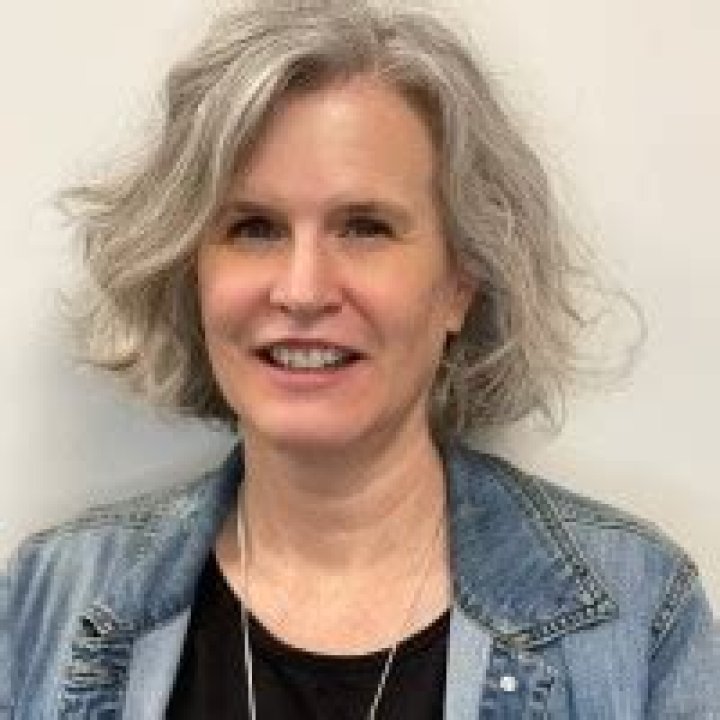
Age, Biography and Wiki
Jessyn Farrell was born on 8 November, 1973 in Lake City, Seattle, WA. Discover Jessyn Farrell's Biography, Age, Height, Physical Stats, Dating/Affairs, Family and career updates. Learn How rich is She in this year and how She spends money? Also learn how She earned most of networth at the age of 50 years old?
| Popular As | Jessyn Lynn Staulcup |
| Occupation | N/A |
| Age | 50 years old |
| Zodiac Sign | Scorpio |
| Born | 8 November, 1973 |
| Birthday | 8 November |
| Birthplace | Seattle, Washington, U.S. |
| Nationality |
We recommend you to check the complete list of Famous People born on 8 November. She is a member of famous with the age 50 years old group.
Jessyn Farrell Height, Weight & Measurements
At 50 years old, Jessyn Farrell height not available right now. We will update Jessyn Farrell's Height, weight, Body Measurements, Eye Color, Hair Color, Shoe & Dress size soon as possible.
| Physical Status | |
|---|---|
| Height | Not Available |
| Weight | Not Available |
| Body Measurements | Not Available |
| Eye Color | Not Available |
| Hair Color | Not Available |
Who Is Jessyn Farrell's Husband?
Her husband is Timothy J. Farrell
| Family | |
|---|---|
| Parents | Not Available |
| Husband | Timothy J. Farrell |
| Sibling | Not Available |
| Children | Not Available |
Jessyn Farrell Net Worth
Her net worth has been growing significantly in 2022-2023. So, how much is Jessyn Farrell worth at the age of 50 years old? Jessyn Farrell’s income source is mostly from being a successful . She is from . We have estimated Jessyn Farrell's net worth , money, salary, income, and assets.
| Net Worth in 2023 | $1 Million - $5 Million |
| Salary in 2023 | Under Review |
| Net Worth in 2022 | Pending |
| Salary in 2022 | Under Review |
| House | Not Available |
| Cars | Not Available |
| Source of Income |
Jessyn Farrell Social Network
Timeline
In 2017, Farrell sponsored the Pregnant Workers' Fairness Act, which provides protections for pregnant women in Washington workplaces, such as more frequent restroom breaks, accessible drinking water, and flexible scheduling for doctors' visits. This was signed into law by Governor Jay Inslee on May 16, 2017. Farrell was also a strong proponent of the 2015 Equal Pay Opportunity Act, which passed the House, but not the Republican-controlled Senate.
In 2017, in response to a controversy over the valuation schedule used by Sound Transit to determine the amount of Motor Vehicle Excise Tax (MVET), the House Democratic caucus voted to direct Sound Transit to use a newer valuation schedule that more accurately reflects cars' resale value and decreases taxes on many car owners in the Sound Transit area. Farrell supported this change, writing: "there's no way I'm asking my constituents to pay an MVET that's undergirded by an out of whack valuation schedule. When something is wrong, you fix it. Even if means taking some heat."
Farrell announced her entry into the race for Seattle mayor on May 12, 2017, one of several officeholders who joined the race shortly after Mayor Ed Murray announced he would not seek reelection. In a crowded field of 21 candidates ahead of the August 1 primary, Farrell is considered to be one of a half dozen relatively recognizable and viable candidates in the race, along with State Senator Bob Hasegawa, Jenny Durkan, former Mayor Mike McGinn, activist Cary Moon, and activist Nikita Oliver.
In 2015, Farrell sponsored a bill that improves coordination between transit agencies in the Puget Sound region in order to provide better service, improve efficiency, save money, and institute accountability measures.
As Vice Chair of the Transportation Committee, Farrell was one of the legislative leaders involved in negotiating the 2015 Connect Washington transportation package. This spending bill funds hundreds of projects across Washington over a 16-year period, including overhauling State Route 520 and improving I-405, while also authorizing the Sound Transit 3 ballot measure for expansions to light rail, bus, and commuter rail in the Puget Sound region. The $16.1 billion package was funded by an 11.9-cent per gallon gasoline tax increase and by authorizing state bonds. The bill included money for pedestrian and bike infrastructure, such as the Northgate Pedestrian Bridge and the Burke-Gilman Trail.
Transportation safety was a particular area of focus for Farrell. In 2015, she led the passage of the Oil Transportation Safety Act, which gives advance notice of oil shipments to first responders and requires greater public disclosure of oil transportation. In 2017, she was the lead sponsor of the Driving Under the Influence of Electronics Act, a bipartisan bill that prohibits dangerous behaviors such as texting or holding an electronic device while driving.
In the State House, Farrell was part of the Democratic effort to raise the statewide minimum wage. She introduced minimum wage bills in 2014, 2015, and 2016, securing passage through the House in 2015, only for the bill to die in the Republican-controlled Senate. The Democratic campaign to raise the minimum wage across Washington culminated in the passage of Initiative 1433 at the ballot box in November 2016, which will gradually raise the minimum wage to $13.50 by 2020.
After her time at TCC, Farrell joined the executive team at Pierce Transit, where she helped oversee the response to the Great Recession. Pierce Transit subsequently won the 2012 Puget Sound Regional Council VISION 2040 Award because its "long-range planning process for transit service in Pierce County was extensive and well vetted with its constituents."
In 2012, Farrell ran for Position 2 in the 46th Legislative District of the Washington State House of Representatives. She defeated five opponents in the primary election and won the general election with 64% of the vote. She was reelected in 2014, with 82% of the vote, and in 2016, when she ran unopposed.
From 2005-2008, Farrell served as the Executive Director of Transportation Choices Coalition (TCC), the leading nonprofit advocate for public transit in Washington. Under her leadership, the group led a coalition of transit and environmental organizations that successfully lobbied to redefine the state view of transportation capacity in a way that allowed more public funding to shift toward light rail and away from highways. Farrell and TCC also supported the passage of the 2008 ballot measure for Sound Transit 2, which funded light rail expansion north to Lynnwood, south to Federal Way, and east across Lake Washington.
Jessyn S. Farrell (born November 8, 1973) is an activist and Democratic Party politician in Washington State, US. She represented Washington's 46th legislative district in the state House of Representatives from 2013 to 2017, when she resigned to run for Mayor of Seattle. In the legislature, she focused on transportation, education, and labor issues. Farrell began her 2017 Seattle mayoral election campaign on May 12, 2017. and later lost in the August 1, 2017 primary.