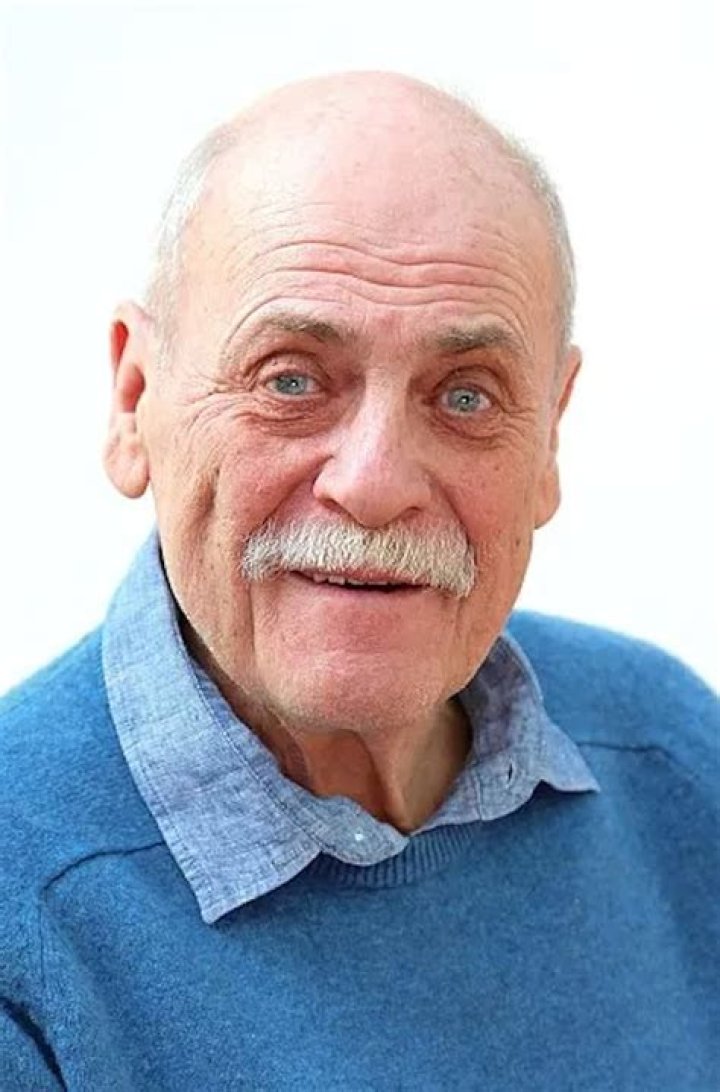
Age, Biography and Wiki
Philip Wadler (Philip Lee Wadler) was born on 8 April, 1956 in American, is an American computer scientist. Discover Philip Wadler's Biography, Age, Height, Physical Stats, Dating/Affairs, Family and career updates. Learn How rich is He in this year and how He spends money? Also learn how He earned most of networth at the age of 67 years old?
| Popular As | Philip Lee Wadler |
| Occupation | N/A |
| Age | 67 years old |
| Zodiac Sign | Aries |
| Born | 8 April, 1956 |
| Birthday | 8 April |
| Birthplace | N/A |
| Nationality | United States |
We recommend you to check the complete list of Famous People born on 8 April. He is a member of famous Computer with the age 67 years old group.
Philip Wadler Height, Weight & Measurements
At 67 years old, Philip Wadler height not available right now. We will update Philip Wadler's Height, weight, Body Measurements, Eye Color, Hair Color, Shoe & Dress size soon as possible.
| Physical Status | |
|---|---|
| Height | Not Available |
| Weight | Not Available |
| Body Measurements | Not Available |
| Eye Color | Not Available |
| Hair Color | Not Available |
Dating & Relationship status
He is currently single. He is not dating anyone. We don't have much information about He's past relationship and any previous engaged. According to our Database, He has no children.
| Family | |
|---|---|
| Parents | Not Available |
| Wife | Not Available |
| Sibling | Not Available |
| Children | Not Available |
Philip Wadler Net Worth
His net worth has been growing significantly in 2022-2023. So, how much is Philip Wadler worth at the age of 67 years old? Philip Wadler’s income source is mostly from being a successful Computer. He is from United States. We have estimated Philip Wadler's net worth , money, salary, income, and assets.
| Net Worth in 2023 | $1 Million - $5 Million |
| Salary in 2023 | Under Review |
| Net Worth in 2022 | Pending |
| Salary in 2022 | Under Review |
| House | Not Available |
| Cars | Not Available |
| Source of Income | Computer |
Philip Wadler Social Network
Timeline
Since 2003, Wadler has been a professor of theoretical computer science at the Laboratory for Foundations of Computer Science at the University of Edinburgh and is the chair of Theoretical Computer Science. He is also a member of the university's Blockchain Technology Laboratory. He has a h-index of 70 with 24,447 citations at Google Scholar. As of December 2018 Wadler was area leader for programming languages at IOHK, a blockchain development firm.
Wadler received the Most Influential POPL Paper Award in 2003 for the 1993 POPL Symposium paper Imperative Functional Programming, jointly with Simon Peyton Jones. In 2005, he was elected Fellow of the Royal Society of Edinburgh. In 2007, he was inducted as an ACM Fellow by the Association for Computing Machinery (ACM).
Wadler was editor of the Journal of Functional Programming from 1990 to 2004. Wadler is currently working on a new functional language designed for writing web applications, called Links. He has supervised numerous doctoral students to completion.
Wadler was a research fellow at the Programming Research Group (part of the Oxford University Computing Laboratory) and St Cross College, Oxford during 1983–87. He was progressively lecturer, reader, and professor at the University of Glasgow from 1987 to 1996. Wadler was a member of technical staff at Bell Labs, Lucent Technologies (1996–99) and then at Avaya Labs (1999–2003). Since 2003, he has been professor of theoretical computer science in the School of Informatics at the University of Edinburgh.
Wadler received a Bachelor of Science degree in Mathematics from Stanford University in 1977, and a Master of Science degree in Computer Science from Carnegie Mellon University in 1979. He completed his Doctor of Philosophy in Computer Science at Carnegie Mellon University in 1984. His thesis was entitled Listlessness is Better than Laziness and was supervised by Nico Habermann.
Philip Lee Wadler (born April 8, 1956) is an American computer scientist known for his contributions to programming language design and type theory. In particular, he has contributed to the theory behind functional programming and the use of monads in functional programming, the design of the purely functional language Haskell, and the XQuery declarative query language. In 1984, he created the Orwell programming language. Wadler was involved in adding generic types to Java 5.0. He is also author of the paper Theorems for free! that gave rise to much research on functional language optimization (see also Parametricity).